OSHA regulation 1926.51 sets the sanitation baseline for construction sites: one toilet for up to 20 workers, and two toilets plus one urinal for 20 to 39 workers. A single standard unit covers most residential…
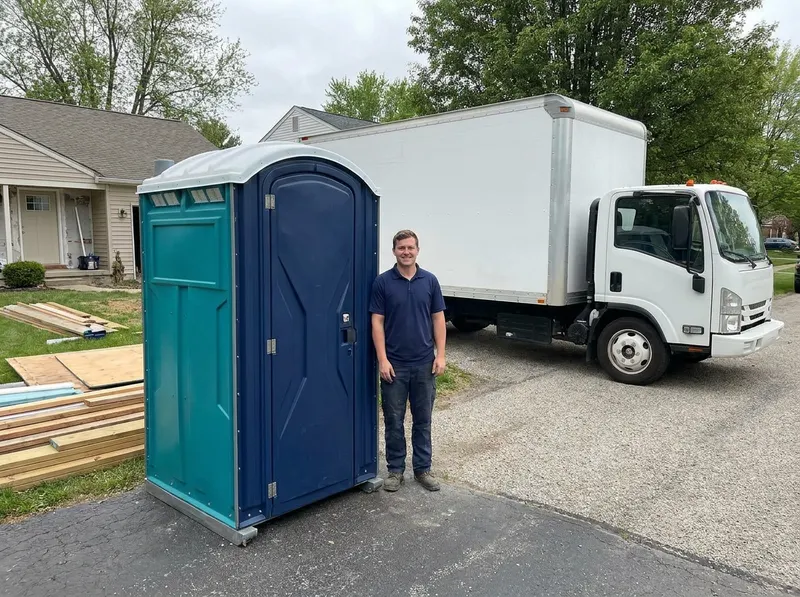
OSHA regulation 1926.51 sets the sanitation baseline for construction sites: one toilet for up to 20 workers, and two toilets plus one urinal for 20 to 39 workers. A single standard unit covers most residential remodels in German Village or Clintonville and small crews of 5-10; a Franklinton apartment build or a Hilltop road job running 20-plus trades needs multiple units placed near the work face so workers lose fewer minutes crossing the site. The unit measures roughly 44 inches square and 90 inches tall, needs about 4x4 feet of level ground, and a delivery truck needs a clear path within about 50 feet of the drop point.
Weekly servicing is the difference between a rental that stays usable and one crews avoid. Scheduled servicing includes a full pump-out, a fresh charge of deodorizer, and restocking of toilet paper and hand sanitizer. On a multi-month build the frequency is set to crew size, not guesswork: weekly for small crews, twice-weekly once daily headcount climbs past 10, and 3x-weekly for large sites in summer heat. This is where the monthly-contract model differs from a weekend event rental, the unit lives on site for the duration and is maintained on a fixed route, so a Dublin or Worthington site manager is not re-ordering every week.
Decision fit runs by crew size and site type. If a job is a single-room bathroom or kitchen remodel in Bexley or Upper Arlington with 3-5 workers on site, one standard unit on weekly service meets the $250 monthly minimum and the OSHA count. If a Victorian Village multi-unit rehab or a Short North mid-rise runs 20-39 workers, plan on two standard units plus servicing frequency stepped up, the trade-off is a higher monthly line item against lost labor time and a compliance gap during a city inspection. A stand-alone hand-wash station is a separate add-on for sites handling concrete, epoxy, or food-adjacent finish work.
Placement matters on tight Columbus lots. Franklinton and German Village infill sites often lack driveway room, so the unit is set on the tree lawn or a graded corner within reach of the pump truck's 25-foot hose. On winter jobs, units are anchored and kept away from downspout runoff so a freeze-thaw cycle does not tip or flood the base. Right-of-way placement on a public street may require a permit from the City of Columbus or Franklin County; the site GC typically pulls it, and the unit is positioned to clear sidewalk and travel-lane clearances.
Every job gets a firm, written price after a free on-site visit.
Tell us about your construction site toilet rental job in Columbus and we'll send a clear, written quote, usually the same day.
 Scioto Portable Toilet Rental